

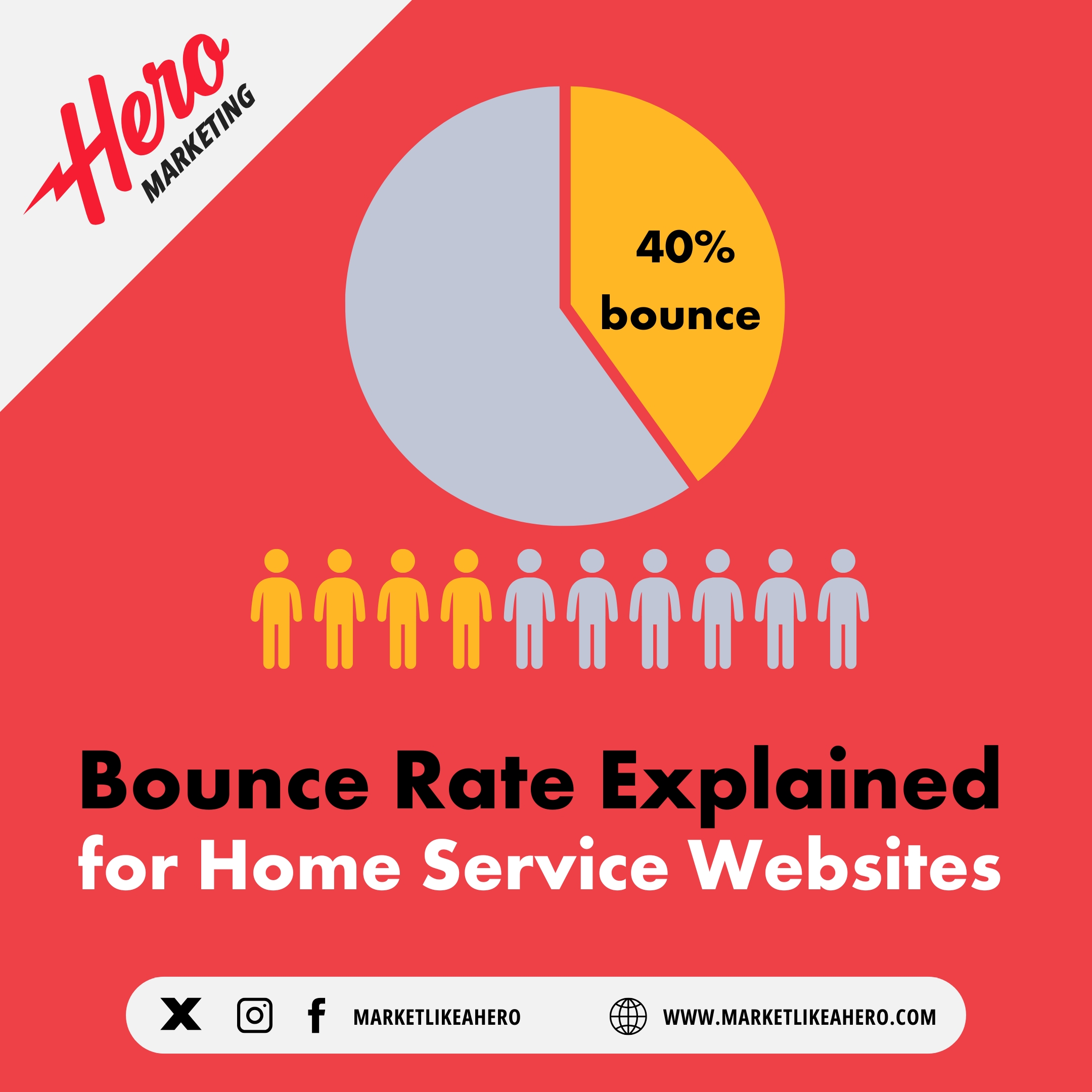
If you run a home services website, you want visitors to explore everything you offer, and that means understanding your bounce rate is crucial.
But what is “bounce rate” in the first place? It’s a figure that measures how often someone arrives at your site and leaves after viewing just one page, whether by closing the tab, hitting the back button, or simply getting what they came for and moving on.
Below, you’ll learn more about bounce rates, including what they measure and how yours can reveal whether your content and user experience are meeting visitors’ expectations.
What Does “Bounce Rate” Mean?
Your bounce rate provides clues as to how well your site is serving its visitors. A low bounce rate generally means your pages are interesting and relevant; people are clicking through to learn more or to contact you, which is a good sign. A high bounce rate, in contrast, can be a warning flag that something isn’t right. Perhaps visitors aren’t finding what they expect, or your site isn’t loading fast enough.
How Can You Interpret Website Bounce Rates?
When you look at your bounce rate, it is essential to connect the numbers to your website’s purpose and your visitors’ goals. For a home services website, a low bounce rate might look like a person landing on a plumbing services page and then clicking over to testimonials or the contact form. That kind of behavior shows they are interested enough to learn more about your business and possibly get in touch.
On the other hand, if visitors land on a service description or blog post and immediately bounce without viewing any related pages, it might mean the content did not engage them or match their needs.
A high bounce rate could also imply that the page your visitor landed on either loaded too slowly or hid key information. For example, someone searching for “roof repair near me” might bounce if they land on your general homepage that doesn’t make your roofing services obvious.
However, a high bounce rate does not always mean your website is failing. Some pages are intended to deliver quick answers. A contact page, for instance, might be enough for visitors who simply want to obtain some quick details, like your address or phone number, and they’ll leave shortly after. In that case, the page has done its job even if the bounce rate looks high. Your analytics will count that as a bounce, but that isn’t necessarily a bad thing.
Viewing Metrics in Context
You should use your website’s bounce rate as a general guide. It can help indicate how engaging or relevant your content marketing is and whether the user experience is smooth. However, it’s important not to evaluate it in isolation or panic if the number seems higher than expected. Always consider it alongside other metrics for a more accurate picture.
Ultimately, for a home services site, context is key. When your pages answer what visitors are looking for, you’ll often see both a healthier bounce rate and stronger conversion results follow naturally.
Learn more about marketing a home services business by scheduling your 20-minute discovery call with the team at Hero Marketing Agency today.